


Railway transport is widely accepted as the safest means of transport and the most environmentally friendly in terms of energy consumption and greenhouse gas emission.
However, noise and vibration (N&V) remain a major environmental challenge for the railway sector, since populations in the vicinity of railways no longer accept the increasing N&V annoyance, and a competitive railway transport system demands lower N&V emissions.
Although many promising initiatives have been launched to tackle the important challenges related to rail N&V emissions, there is still work to do and QuieterRail will address these challenges, aiming to introduce a step change in predicting and mapping railway noise and vibration, in the acceptance testing of rolling stock, and in promoting cost-effective noise mitigation.
Latest News
As part of the QuieterRail project, a first measurement campaign focused on noise and vibration in urban rail environments was organised during summer 2025. The campaign took place on Lyon’s tramway network, which offers a diverse range of track types from ballasted...
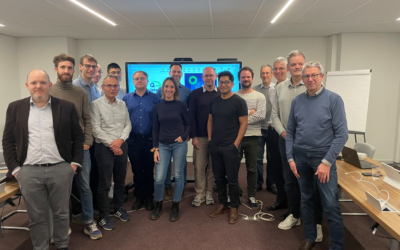
The 1st QuieterRail Plenary was hosted on 17–18 November by UNIFE at their premises. The meeting gathered all project partners with the objective of technically reviewing the progress made after the conclusion of the project’s first year. During the meeting, each WP...

As part of the @ERJU-funded QuieterRail project, Work Package 3 is developing a harmonised, data-driven approach to measuring acoustic rail roughness on-board — an important step toward quieter railways and being a better neighbour to lineside communities. As an...
QuieterRail in a Nutshell
Duration
Total project value
Partners